
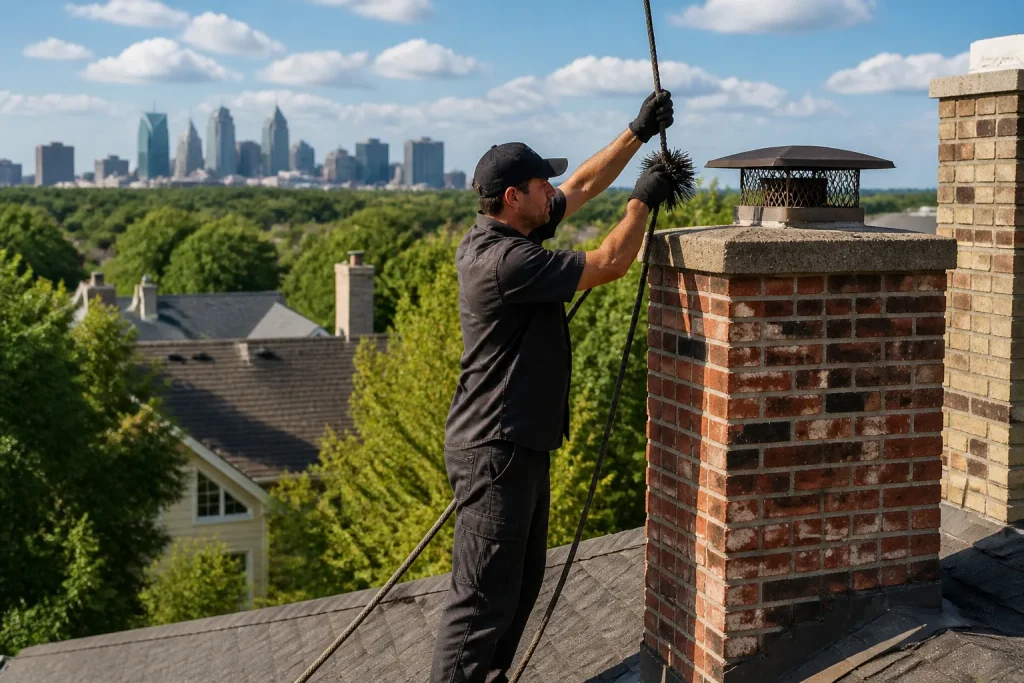
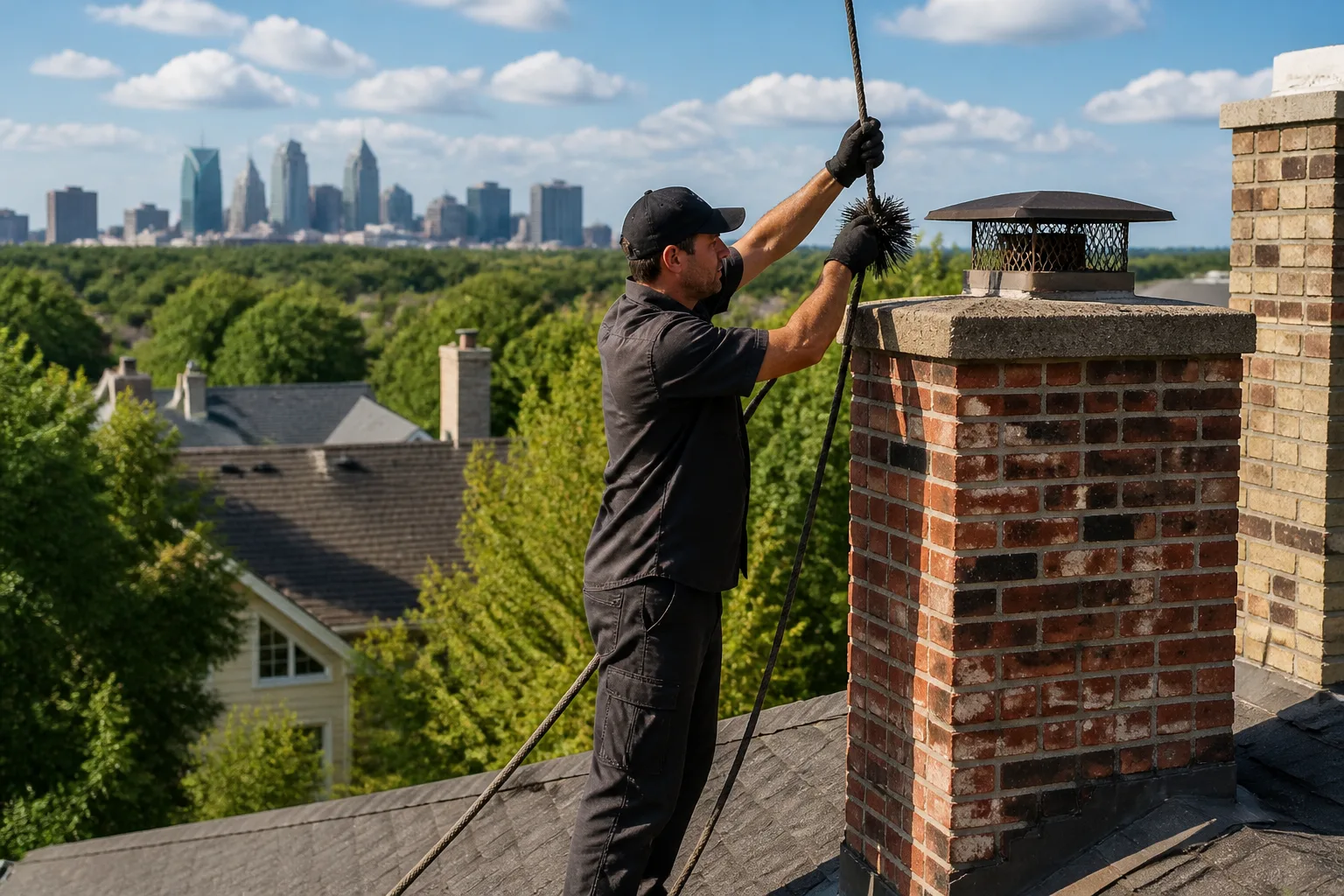
Chimney Sweep: Repair or Replace? How Bluffview Homeowners Decide
A 40-year-old chimney with an intact liner and a solid crown can outlast a 15-year-old chimney with crumbling mortar joints. That sounds backwards until you’ve looked inside enough flues to know that age tells you almost nothing about whether a chimney should be repaired or replaced. The real question isn’t how old your chimney is. It’s which component is failing, how far that failure has spread, and what it’s putting at risk. Here’s the framework we use when we’re standing in front of a Bluffview chimney trying to answer that honestly.
If you’d rather have a trained eye look at it before you make the call, call (866) 901-7504. Estimates are free, and every visit starts with an inspection.
Why Age Is the Wrong Variable
Homeowners in Bluffview often ask some version of “how long does a chimney last?” and expect a number. There isn’t one that means anything. A chimney is a system of parts that wear at completely different rates. The masonry shell, the flue liner, the firebox, the damper, the crown, and the cap all age on their own schedules, and each one has its own repair threshold.
We’ve seen a chimney built decades ago where the liner was sound, the crown shed water properly, and the only real work needed was a sweep and a new cap. We’ve also seen a much newer chimney where the mortar joints were already soft and a gap had opened between the flue and the surrounding masonry. If you judged both by age, you’d get both decisions wrong.
What actually determines repair versus replace is this:
- Which component is failing – a cap is a small job, a liner is a bigger one, and a collapsing masonry stack is a different conversation entirely.
- How localized the failure is – one cracked crown is repairable. Deterioration that’s spread through the whole flue is not.
- What that failure put at risk – a failing liner exposes the surrounding structure to heat and corrosive flue gases. That risk usually matters more than the part itself.
- Whether a repair will hold – patching something that’s structurally past saving just moves the cost down the road.
That’s the whole decision model in four lines. Everything below is about applying it in Bluffview specifically.
Component by Component: What Gets Repaired and What Gets Replaced
This is where the repair-or-replace question actually gets answered. Homeowners tend to think of the chimney as one object. It’s really five parts, and each one has a different tipping point.
The flue liner
The liner is the passage the smoke and gases travel through. When it’s cracked, spalling, or missing in places, you have a real problem – not cosmetic. Minor cracks can sometimes be addressed with a resurfacing product. HeatShield is the one we work with; it’s designed to restore a deteriorating flue liner from the inside without pulling the whole thing out. That’s a genuine middle path between “do nothing” and “full reline,” and we’ll tell you plainly which side of the line your chimney falls on.
When the liner is too far gone for resurfacing, replacement is the right answer, and a flexible stainless liner is the standard approach. We install DuraFlex systems for that reason – they’re made for this exact job and hold up the way a liner needs to.
The crown
The crown is the concrete cap at the top of the stack. It sheds water away from the masonry below. A hairline crack is a repair. A crown that’s separated from the flue or has broken into pieces is usually a replacement. This one matters more than people expect, because a leaking crown lets water into the masonry all winter, and that water does far more damage than most homeowners realize.
The firebox
The firebox is where the fire actually sits. Cracked firebrick or a deteriorating firebox is repairable, but it has to be done with the right material. This is fireplace repair territory, and it’s worth doing properly because a failed firebox lets heat reach places it shouldn’t.
The damper
The damper is a small part that’s usually a straightforward repair or replacement. It rarely drives a large decision on its own – but a damper that won’t close properly means you’re losing heat up the chimney all winter, and that’s easy to fix.
The cap
A missing or damaged cap is the cheapest, easiest fix on this list, and one of the most worthwhile. We fit caps from Gelco and Olympia Chimney because a properly fitted cap keeps water, birds, and debris out of the flue. A bad cap is never a reason to replace a chimney.
That’s the component breakdown. Notice that only one of these five – the liner – realistically pushes a homeowner toward full replacement, and even then only when resurfacing isn’t an option.
How Bluffview’s Climate and Soil Shape the Decision
No two places wear a chimney the same way, and Bluffview is no exception. The two forces doing the most damage here are soil movement and the mild freeze-thaw cycles we get through the cooler months.
The ground in this part of Texas shifts with moisture. That movement works on a chimney from the bottom up. A masonry chimney is a heavy structure sitting on its own foundation, and small shifts can open cracks in the mortar joints or pull the chimney slightly away from the house. This is one reason a chimney that looks fine from the ground can have real structural problems higher up. It’s also why a visual check from the driveway tells you so little.
The freeze-thaw cycles matter too. Even a mild winter with a handful of freeze-thaw swings is enough to drive water into small cracks, expand it, and widen the crack. A crown that was a minor repair last summer can be a larger one by spring. For Bluffview homeowners, that means catching small failures early – while they’re still cheap to fix – is the whole game. The repair-or-replace decision usually gets easier the less you wait.
This is also why we start every job with an inspection. Guessing at what a chimney needs based on how it looks from outside is how real money gets spent on the wrong thing.
What a Level 2 Inspection Reveals That a Visual Check Won’t
A basic visual sweep tells you what’s on the outside and what’s directly reachable. It doesn’t tell you what’s happening inside the flue or in the hidden parts of the structure. That’s a Level 2 inspection, and it’s the step that changes the repair-or-replace conversation.
A Level 2 inspection gets a camera inside the flue so you can see the actual condition of the liner. It also covers the accessible parts of the chimney and its connections. What it usually turns up:
- Cracks or gaps in the liner that aren’t visible from the firebox
- Evidence of past flue fires – not every one is obvious from outside
- Deterioration in the masonry around the flue that hasn’t shown up at the surface yet
- Improper or missing clearances to the surrounding structure
- Signs of water intrusion that point back to the crown or cap
The reason this matters is simple: you can’t make a confident repair-or-replace call on a chimney you haven’t actually looked inside. A homeowner who makes this decision from a visual sweep alone is guessing. So is anyone who quotes you a reline without checking what the liner actually looks like. Ask to see the camera footage. A trained technician will welcome the question.
The Cost Comparison That Actually Matters
Most homeowners compare the price of one repair to the price of a full replacement. That’s not the right comparison. The right one is the total cost of repairing over time versus the cost of replacement spread over its expected lifespan.
Here’s the way to think about it. If one repair fixes the problem and holds, that’s a clean win – you fixed the issue for less than replacement. If you find yourself paying for a repair to the same component every couple of years, you’re not saving money. You’re paying for replacement in installments, with all the inconvenience of repeated visits. That’s the point where replacing the failing component makes more sense than continuing to patch it.
The second comparison is risk. A repair that fixes the cheap problem while leaving a structural one unaddressed isn’t a repair – it’s a delay with a receipt. Before you approve any repair, ask what else is affected. If the liner is the real issue, a fresh coat of material on the firebox won’t help.
We don’t quote a number sight-unseen, and we don’t recommend work a chimney doesn’t need. If you’ve had an inspection and you’re weighing the options, we’ll walk through what the footage shows and what each path costs. The written estimate sets the final price, and the inspection comes first every time.
Questions to Ask Before You Approve the Work
You don’t need to know chimneys to make a good decision here. You need the right three questions answered clearly. Ask any technician these before you approve anything:
- What exactly is failing, and can I see it? If they can’t point to it on camera or in person, don’t approve the work. “It looks bad” is not an answer.
- How long will this repair realistically last? A good answer gives you a real timeline, not a shrug. If a repair is likely to need repeating in a few years, that’s a signal you should be weighing replacement instead.
- What else does this failure put at risk? A failing liner isn’t just a liner. It affects the structure around it. You want to know the downstream risk before you decide.
And if a technician can’t answer any of these three, that tells you something too. Chimney work is not the place for a generalist guessing at the problem. We work exclusively on chimneys and fireplaces, and we’d rather tell you a repair can wait than sell you a replacement you don’t need.
When to call a pro
If you’re asking yourself whether your chimney needs a repair or a replacement, that’s already the moment to have it inspected. It’s not a job to work out by feel. Call (866) 901-7504 to book an inspection, and we’ll show you what’s actually going on.
Related services in Bluffview
Depending on what the inspection turns up, the next step might be a routine chimney sweep, chimney cap & crown work, or liner and structural repairs scoped to what your chimney actually needs.
The Bottom Line
Repair or replace comes down to which component is failing and how far the failure has spread – not how old the chimney is. A sound liner and a solid crown beat age every time. Catching small failures early, in a climate where soil movement and mild freeze-thaw cycles widen cracks a little each season, is the most cost-effective move a Bluffview homeowner can make. Get a real inspection with a camera. Ask the three questions above. Then decide.
If you’re in Bluffview and you’d like a straight answer on what your chimney needs, Chimney Sweep Bluffview offers free estimates. Call (866) 901-7504. We answer 24/7. Fast dispatch from 7am to 7pm, Sunday through Friday. Every job starts with an inspection, so you know exactly what your chimney needs – and what it doesn’t.
Frequently Asked Questions
Most chimneys can be repaired rather than replaced. Full replacement is only the right call when a structural component – usually the liner or the masonry shell – is past the point where a repair will hold. In most cases we see, a targeted repair, resurfacing, or a reline solves the problem for far less than replacement. The only way to know is a camera inspection. Call (866) 901-7504 for an exact quote; estimates are free.
Once a year is the general standard, and more often if you burn heavily or have any reason to suspect a problem. In a place where soil movement and mild freeze-thaw cycles open cracks a little more each season, an annual inspection catches small failures while they’re still cheap to fix. It’s less about chimney age and more about catching problems before they spread.
Small problems grow. A cracked crown lets water into the masonry, which widens the crack over the cooler months. A failing liner exposes the surrounding structure to heat and flue gases. Neither is a reason to panic, but both get more expensive the longer they go. That’s the honest math – a repair now almost always costs less than the same repair later, after the damage has spread. Call (866) 901-7504 to get ahead of it.
Sometimes, yes. HeatShield resurfacing restores a deteriorating flue liner from the inside without full replacement, and it’s a genuine option for liners that aren’t too far gone. When the liner is past that point, we install DuraFlex flexible liner systems instead. We’ll show you what the camera saw and tell you which one your chimney actually needs. Call (866) 901-7504 for a free estimate.
Fires, Safety, and Why This Decision Matters
It’s worth naming what’s actually at stake, without dressing it up. Creosote – the residue left behind by burning wood – accumulates in the flue, and a heavy enough buildup can catch fire. A chimney fire can damage the liner and the surrounding masonry, and in the worst cases spread into the structure of the house. A cracked or damaged liner does the same job in reverse: it fails to contain the heat and gases from a normal fire. Carbon monoxide is the quieter concern, since it’s odorless and a damaged flue can let it reach the living space instead of venting outside.
This is the real reason we push for a proper inspection before any repair-or-replace decision. It’s not about selling work. It’s that the things you can’t see – inside the flue, behind the masonry – are exactly the things that decide whether the chimney is safe to use. A camera inspection shows you the condition of the liner. A sweep clears the buildup that makes a fire more likely in the first place. Both belong in any honest assessment of what a chimney needs.
We work exclusively on chimneys and fireplaces, using professional-grade materials – DuraFlex, HeatShield, Copperfield – because your chimney system deserves more than a hardware-store fix. One specialist for the whole system: sweeping, caps, crowns, liner repair, and masonry work. No referrals out, no scope gaps, and no upsell on a replacement you don’t need.
Written by the team at Chimney Sweep Bluffview.
Need Chimney Cleaning Help?
Call Chimney Sweep Bluffview - the local pro we connect you with is licensed and insured, with free written estimates in Bluffview.
(866) 901-7504