
Last updated November 23, 2026
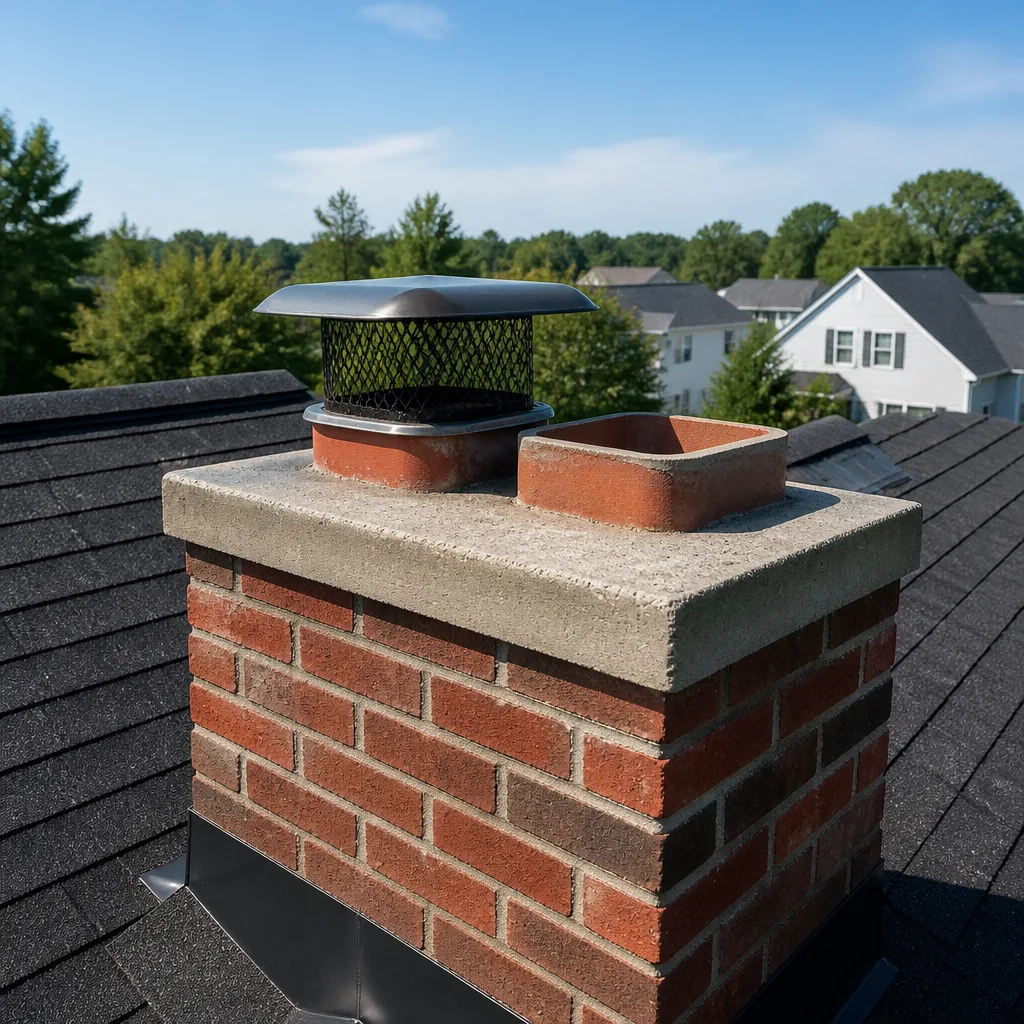 Sweep & inspection
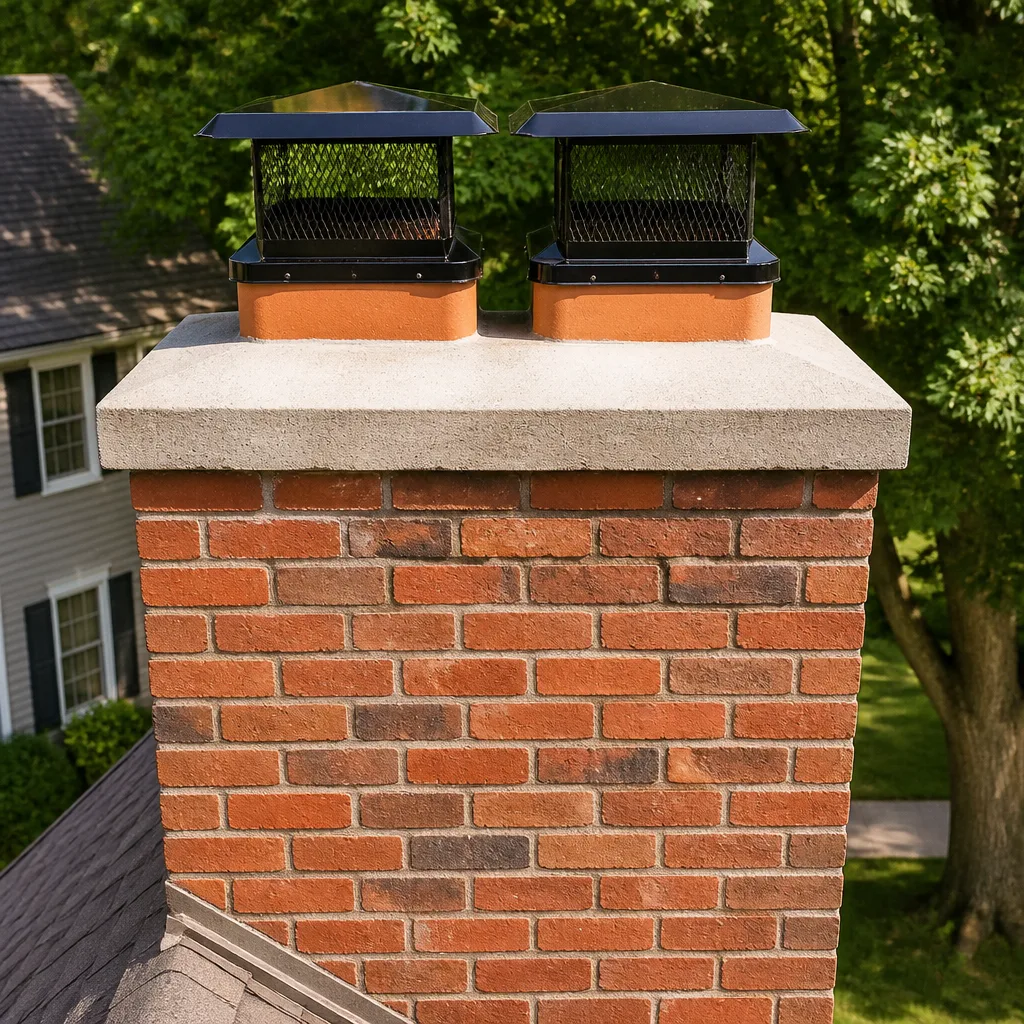 Caps & crowns
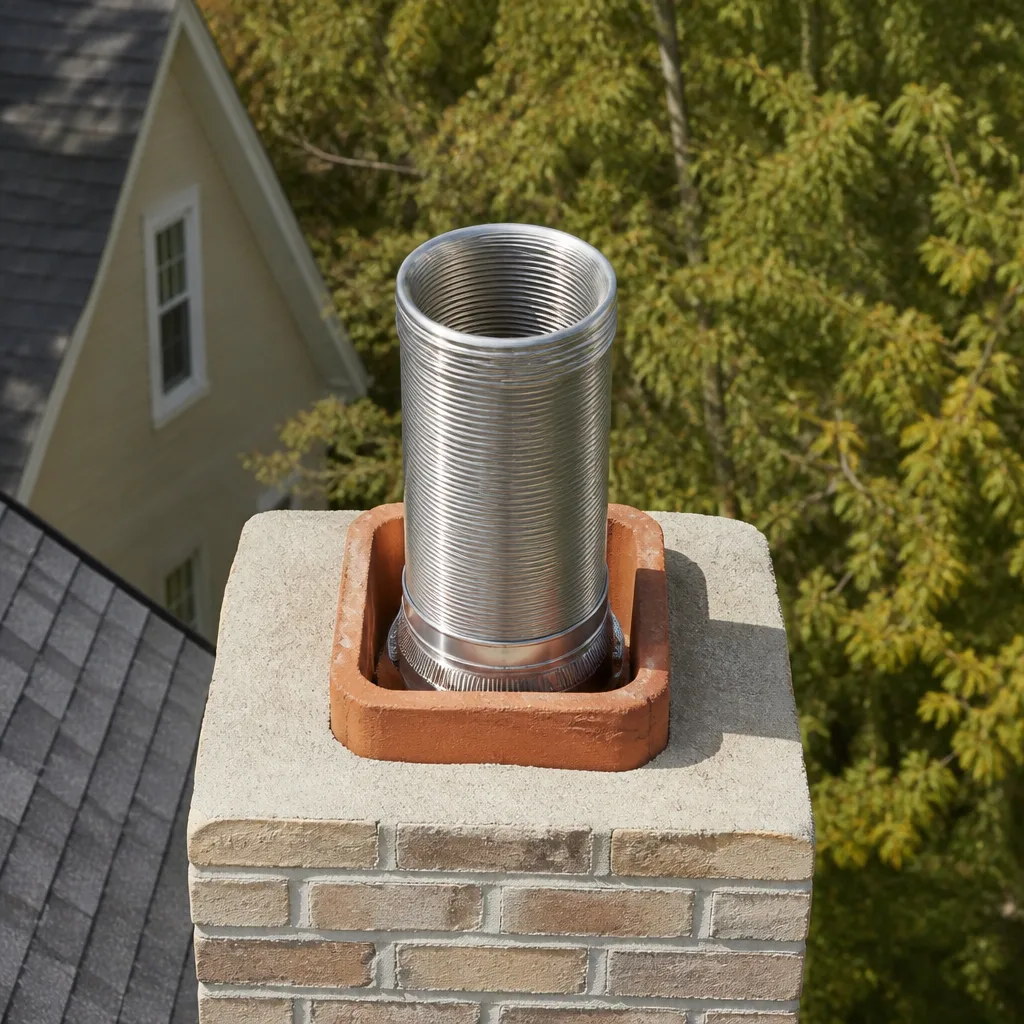 Flue relining
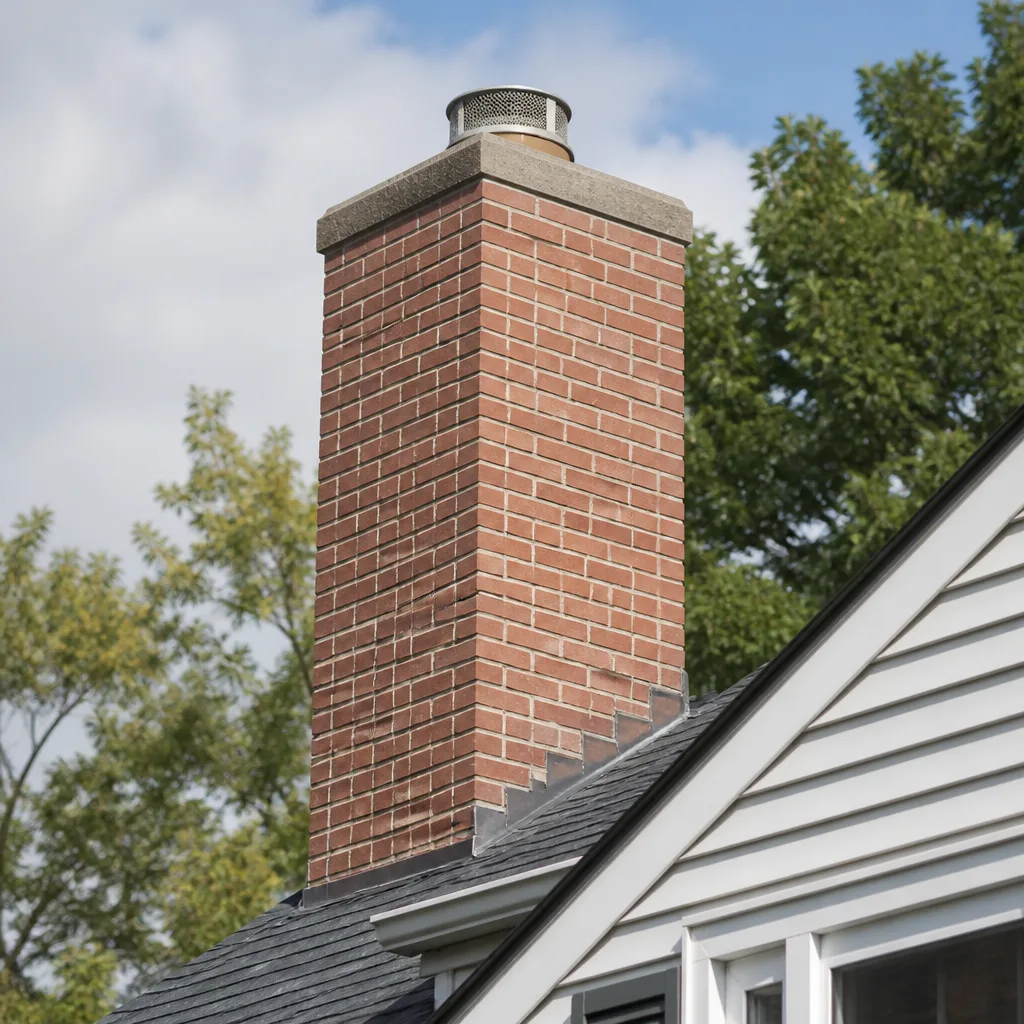 Masonry repair
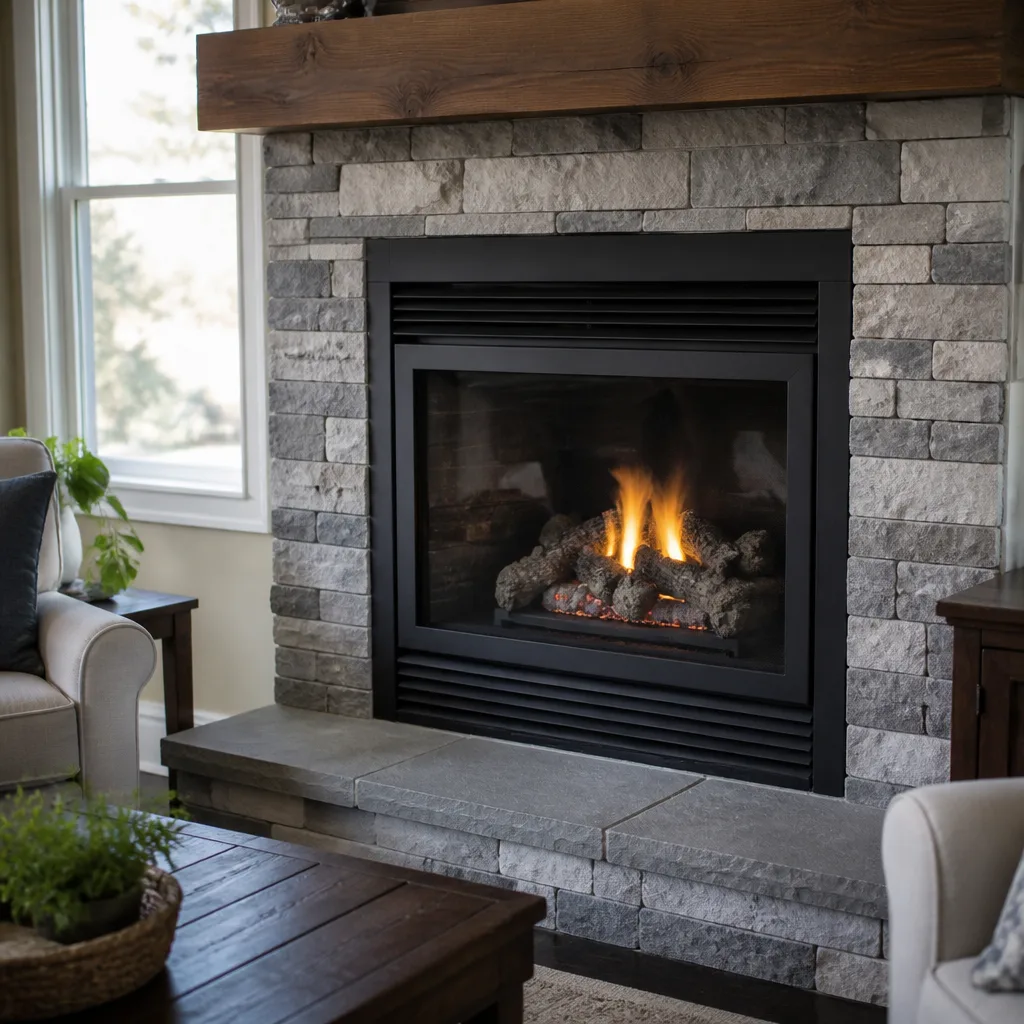 Gas fireplace service
Level 1 sweep and inspection to the NFPA 211 annual standard - flue, crown, cap, and flashing checked and photographed
Chimney sweep logs do not sweep chimneys. They loosen some creosote - which then falls where a brush and vacuum still have to collect it.
Chimney Cleaning Warning Signs: A Bluffview Homeowner’s Reference Guide
Most homeowners assume the first sign of a chimney problem is smoke rolling into the room. In our experience, that’s rarely how it starts. The earliest warnings are quieter: a faint creosote smell on a warm afternoon, a fleck of rust on the damper, a puff of grey dust when you open the firebox door. A strong smoke smell in your living room when the fireplace isn’t in use isn’t a quirk of older homes. It’s one of the most reliable signals that your chimney’s draft system has a problem that cleaning alone may not fix. This guide walks through what you can see from your own living room in Bluffview, what each sign actually means, and which ones mean call today versus schedule an inspection.
Quick Answer
The main chimney cleaning warning signs are a strong smoky odor when the fireplace is off, dark creosote buildup visible above the damper, spalling firebrick or white efflorescence inside the firebox, rust on the damper or firebox metal, and staining or crumbling mortar on the exterior stack. Signs that mean stop using the fireplace until a professional looks at it are a smoky smell with no fire burning, rust streaks below the crown, a damaged or missing cap, and any visible cracking in the flue. Everything else usually means a cleaning is due, not an emergency.
Styles & brands we work with
- Sweep & inspection
- Caps & crowns
- Flue relining
- Masonry repair
- Gas fireplace service
Table of Contents
- Why a Smoky Smell Without Visible Smoke Matters Most
- Reading the Firebox: Spalling, Efflorescence, and Rust
- Creosote: The Sign You Can See and the One You Can’t
- Animal Intrusion: Signs to Catch Before Nesting Season
- Exterior Warning Signs Visible From the Ground
- Schedule a Cleaning vs. Stop Using the Fireplace
- What a Bluffview Chimney Inspection Actually Involves
Why a Smoky Smell Without Visible Smoke Matters Most
If your living room smells like a campfire when no fire is burning, your chimney is telling you something. That smell is creosote and soot off-gassing, usually pulled back into the room by a reverse draft or a blocked flue. It’s more serious than visible smoke with minimal odor because visible smoke at least travels up and out. A smell with no smoke means the exhaust isn’t leaving your house the way it should.
In Bluffview, this pattern often shows up in the shoulder seasons. Mild days followed by cool nights create temperature inversions that stall the draft, and a chimney that’s already restricted by buildup or debris has nowhere to push the exhaust but back into the living space. Homeowners sometimes notice it first in a bedroom or hallway far from the fireplace, which is a sign the smell is migrating through the house rather than venting outside.
What causes the smell
- Creosote buildup: A glazed layer of creosote traps odor and releases it whenever the chimney warms up.
- Blocked flue: Nesting material, soot, or a collapsed liner tile leaves exhaust with no clear path.
- Negative pressure: A tightly sealed house can pull air down the chimney instead of up.
- Damper not sealing: A warped or rusted damper lets odor drift in even when closed.
A smoky smell alone isn’t proof your chimney is dangerous. But it’s a strong enough signal that a professional should look at it before you light another fire. In our experience, this is the sign homeowners most often dismiss for a season too long.
Reading the Firebox: Spalling, Efflorescence, and Rust
Your firebox tells you more about your chimney’s health than almost anywhere else in the house, and you can inspect it yourself with a flashlight before you ever call anyone. Three visual cues deserve close attention: spalling firebrick, white efflorescence, and rust on metal components.
Spalling firebrick
Spalling is when the face of a firebrick flakes, chips, or crumbles. It’s a sign the brick is absorbing moisture and expanding, then breaking apart as it dries. Small chips are common and often just cosmetic. Deep spalling, where the brick face is gone and the interior is exposed, means the firebox is losing its heat shield and should be evaluated before the next fire season.
White efflorescence
A chalky white powder on the firebrick or surrounding masonry is efflorescence, mineral salts pushed to the surface by moisture moving through the brick. On the interior, it points to water getting into the chimney from the top, usually through a cracked crown or a failed cap. That water then works through the masonry, which is why efflorescence and spalling often show up on the same firebox wall.
Rust on the damper or firebox metal
Rust on the damper, damper frame, or any metal door hardware means moisture is present where it shouldn’t be. A little surface rust on an older damper isn’t alarming. Streaking rust that returns after you wipe it clean signals ongoing water intrusion. That’s not a cleaning problem. It’s a chimney structure problem, and it usually gets better once the top of the chimney is properly sealed.
If you spot any of these three, note what you see and where. That’s the starting point for your inspection, and it helps a professional know whether to look at the flue, the cap, the crown, or all three.
Creosote: The Sign You Can See and the One You Can’t
Creosote is the tar-like residue that condenses on the inside of the flue as wood burns. You can sometimes see the softer, flaky stage by looking up the flue with a flashlight through an open damper. The glazed, hard stage is harder to see, and that’s the stage that catches fire. Creosote comes in three recognizable forms, and each one tells you something different.
- First-degree creosote: Soot and light flaky deposit. It brushes off easily and is the normal result of regular fireplace use. A routine chimney sweep handles it.
- Second-degree creosote: Crusty, more brittle buildup that flakes and chips. It’s harder to remove and points to a wood-burning habit or draft problem worth reviewing with a professional.
- Third-degree creosote: Glazed, tar-like, and shiny. This stage is fuel and burns hot. It requires professional removal, and no amount of brushing with a household tool will clear it.
Bluffview homeowners who burn frequently in winter, especially with less-seasoned wood or a fire kept regularly low and slow, tend to accumulate creosote faster. The draft system works fine, but low-temperature fires produce more condensation, and condensation is what turns soot into glaze. If you’ve noticed a heavier soot smell or seen a shiny, glassy deposit along the flue, that’s a sign to stop burning and get an inspection. We always put an inspection before a repair decision so you know exactly what stage of buildup you’re dealing with.
Animal Intrusion: Signs to Catch Before Nesting Season
Birds, squirrels, and raccoons treat an open chimney like a hollow tree, and they return to the same one year after year. The easiest sign to miss is also the clearest: scratching, chirping, or rustling coming from the chimney breast or the cap area, especially in the mild Bluffview springs. Catching animal intrusion before nesting season is far easier than dealing with it afterward.
Signs to look and listen for
- Animal sounds in the flue, especially at dawn or dusk
- Twigs, leaves, or droppings in the firebox
- A faint ammonia smell (urine of nesting animals)
- Glimpses of movement at the top of the chimney when you check from outside
- A sudden drop in draft or a smoky fireplace that was working fine last season
A blockage from a nest restricts airflow, which raises carbon monoxide risk in the home even if the fireplace is only used occasionally. That’s the real reason animal intrusion is a “stop using the fireplace” sign and not a “wait until next spring” sign. We’re a full-scope chimney specialist, so cap and crown work falls inside what we handle rather than something we hand off. A properly fitted cap from Gelco or Famco keeps animals out and blocks the pattern before it sets in. If you’ve heard something in the chimney, don’t light a fire to try to flush it out. Call for an inspection.
Exterior Warning Signs Visible From the Ground
You don’t need to climb onto the roof to spot real trouble. Stand at the edge of your yard, look up at the stack, and check four things. Each one points to a different cause, and each one has a plain-language explanation worth understanding.
Staining below the crown
Dark vertical staining on the masonry just below the crown usually means water is running down the outside of the flue rather than shedding off the top. The crown is the cement cap at the very top of the stack, and when it cracks or pulls away from the flue, water finds the gap. What looks cosmetic on the wall of the stack is often a crown problem underneath.
Deteriorating mortar joints
Mortar is softer than brick, so it wears first. Crumbling, receding, or sandy mortar joints at the top of the stack mean water is getting in and the brick is starting to shift. If you can stick a fingernail into a joint and it crumbles, it’s past the point where pointing can wait indefinitely.
Damaged or missing cap
The cap is the metal or masonry cover over the flue. When it’s missing or bent, rain, snow, birds, and squirrels all have a clear path. A properly fitted cap from Gelco or Famco stops all three problems at once.
White staining on the exterior
Efflorescence on the outside of the stack is the same mineral deposit you’d see inside a firebox. It means the masonry is wet on the inside of the brick and drying outward. Fixing it means finding where the water is entering, usually at the crown.
Schedule a Cleaning vs. Stop Using the Fireplace
Sorting what you see into two lists is the most useful thing you can do before you call. Some signs mean a cleaning is due. Others mean no fire until a professional has looked at the system.
Schedule a cleaning
- Soot visible on the firebox walls
- Light, flaky creosote (first-degree) along the flue
- A smoky smell that only appears when the fireplace is in use
- A routine maintenance sweep is due based on your burn habit
- Minor surface rust on an older damper that wipes off
Stop using the fireplace until a professional inspects it
- Strong smoky smell with no fire burning
- Glazed, shiny creosote in the flue
- Rust streaks on the damper or firebox metal
- Spalling firebrick with the interior of the brick exposed
- Animal sounds or a nest in the flue
- Visible cracking in the firebox or flue with the liner exposed
- Staining below the crown or crumbling mortar joints at the top of the stack
If you can’t decide which list a sign belongs to, treat it as the second until someone inspects it. A few weeks without a fire costs nothing. A chimney fire or carbon monoxide problem costs a lot more. If you ever smell gas or suspect a gas line problem, that’s a different call entirely – leave the house and call your gas utility. We don’t touch gas lines and we won’t guess about them.
What a Bluffview Chimney Inspection Actually Involves
Here’s what a real inspection looks like so you know what you’re paying for and what to expect. Every visit we do starts with an inspection, and it ends with a written summary of what we found and what it means. No guessing, no estimates drawn up before anyone looked up the flue.
- Visual check of the firebox and damper. We look for spalling, efflorescence, rust, and cracking, and we show you what we see.
- Flue assessment. We check the flue for creosote stage, blockage, and liner condition. Where appropriate, we use a camera so you can see the inside of your flue the way we do.
- Exterior check. Cap, crown, mortar joints, and stack condition from the roof line. This is where most water intrusion starts.
- Findings and options. We tell you what needs attention now, what can wait, and roughly what each option costs.
If the flue liner is deteriorating, we work with DuraFlex flexible liner systems and HeatShield resurfacing. Both are professional-grade options that address the same problem in different situations: full liner replacement for structural failure, HeatShield when the existing liner can be restored in place. We’ll tell you which one your chimney actually needs based on what we see. For structural chimney repair and masonry work, that’s handled in-house rather than referred out, which keeps the whole system on one plan. We source from Olympia Chimney and Copperfield because those are the supply lines the professional trade uses, not a generalist with a hardware-store workaround.
Common Mistakes to Avoid
- Waiting for visible smoke before you call. A smoky smell with no fire burning is the louder warning, and it’s the one most homeowners ignore longest. If the smell is there, treat it as a sign.
- Burning a hot fire to “clear out” a blocked chimney. If the flue is blocked by a nest or heavy creosote, a hot fire is the worst thing you can do. Stop using the fireplace and get it inspected.
- Climbing onto the roof in Bluffview’s wet weather to look at the crown yourself. A wet roof is a slip hazard, and a roofing-level fall is serious. Check the stack from the ground and let a professional handle the roof.
- Repointing mortar with a hardware-store mix instead of the correct mortar. Chimney mortar is softer than the joints on your house, and a hard mix traps moisture and accelerates spalling. This is one of the most common mistakes we correct.
- Ignoring white staining on the exterior of the stack. Efflorescence means water is in the masonry. Fixing the crown and cap stops it; painting over it traps the water inside.
- Assuming your general handyman can do the work. Chimney repair is not a side service. Liner work, crown repair, and firebox masonry need specialty equipment and materials that a general contractor doesn’t keep in the truck.
- Waiting until nesting season to catch animal intrusion. If you hear something in the chimney in Bluffview in spring, deal with it that week, not in June. Nests compound quickly and block the flue.
See the difference
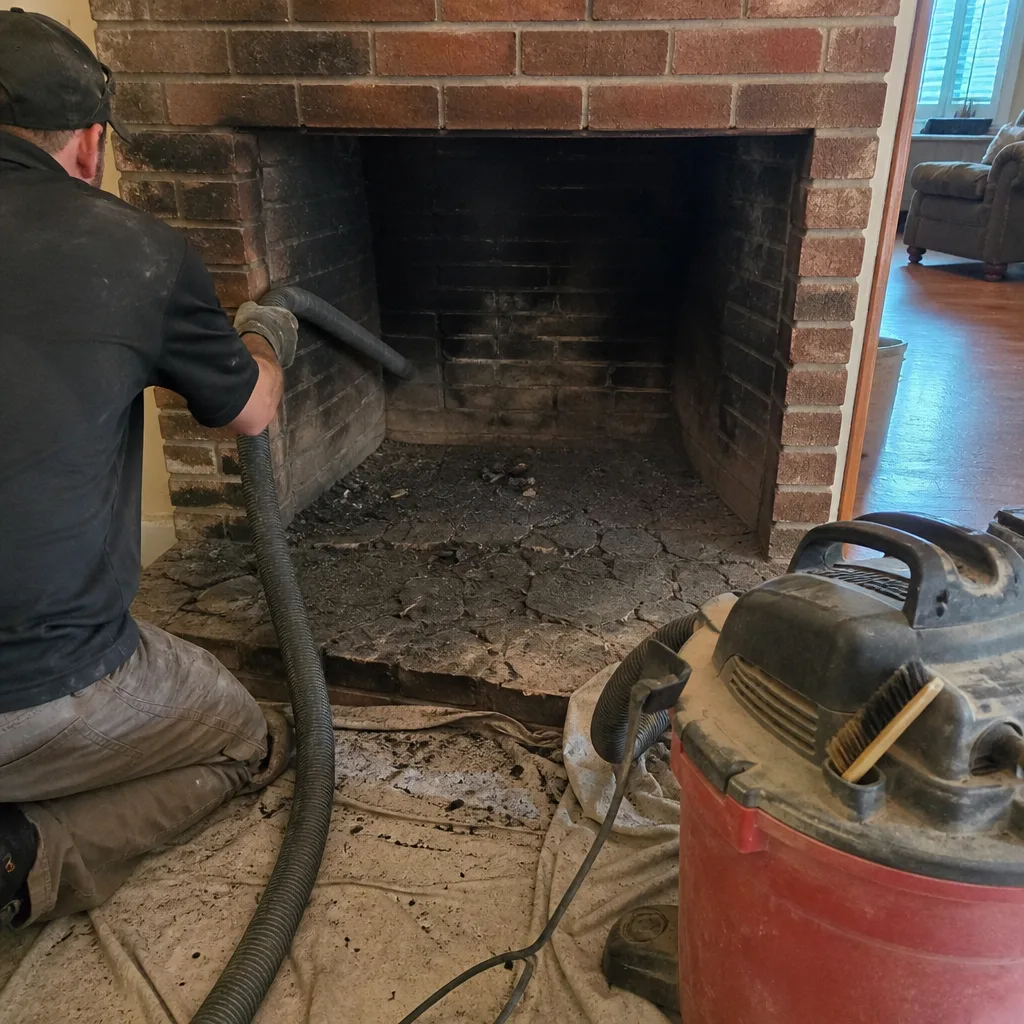 Before
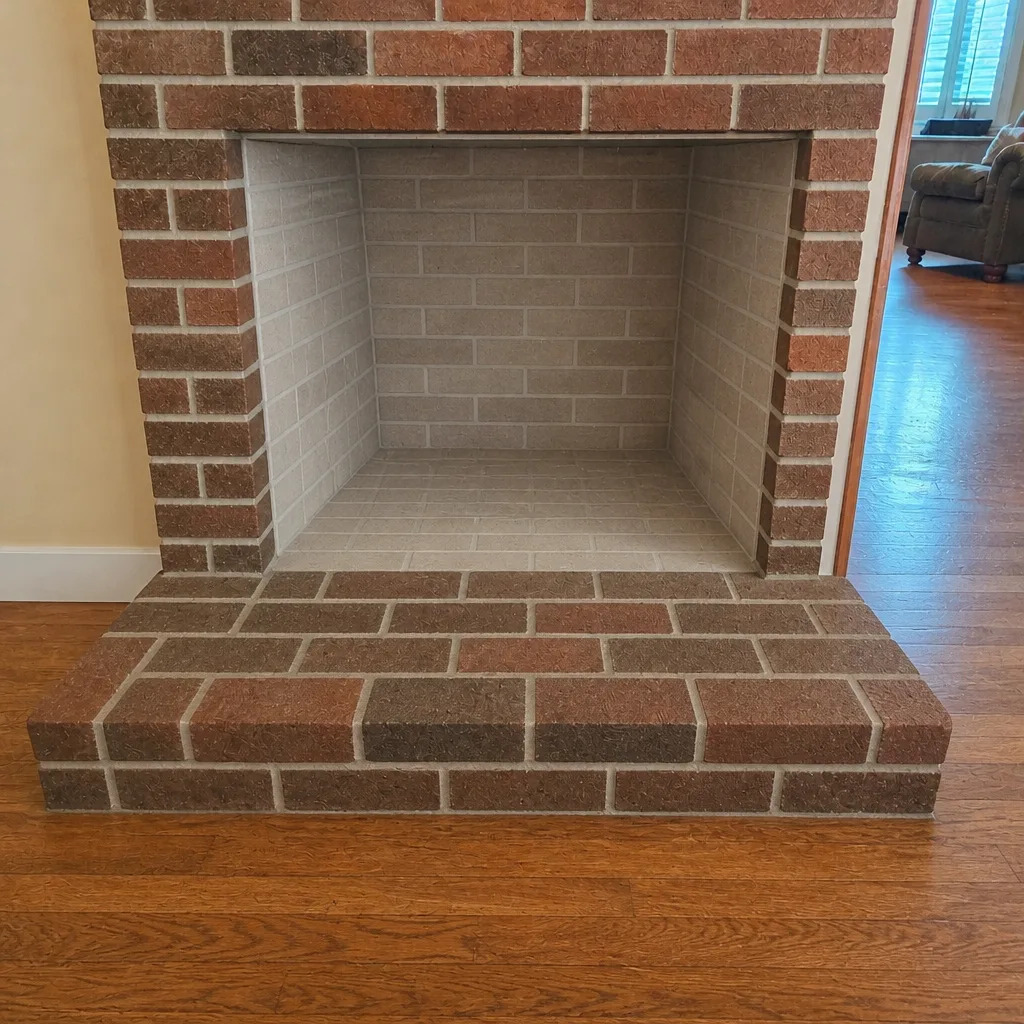 After
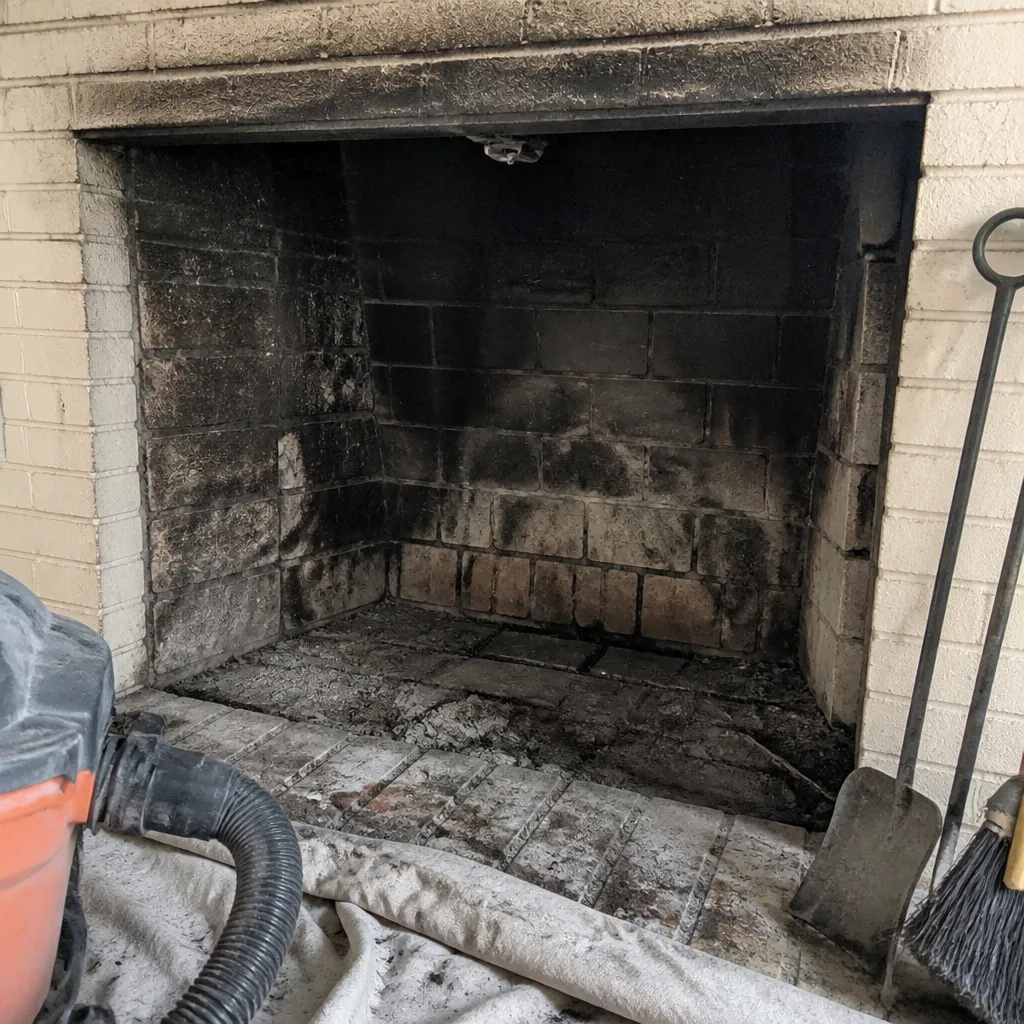 Before
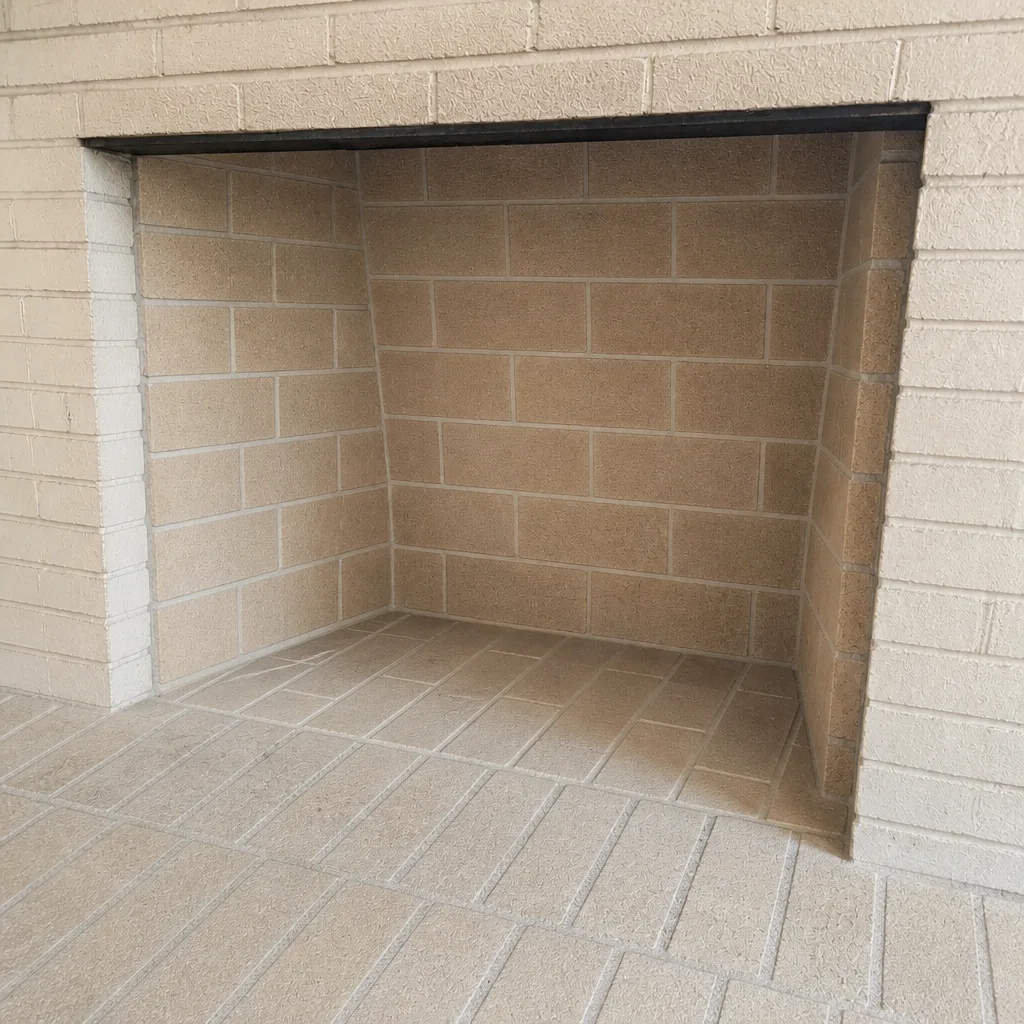 After
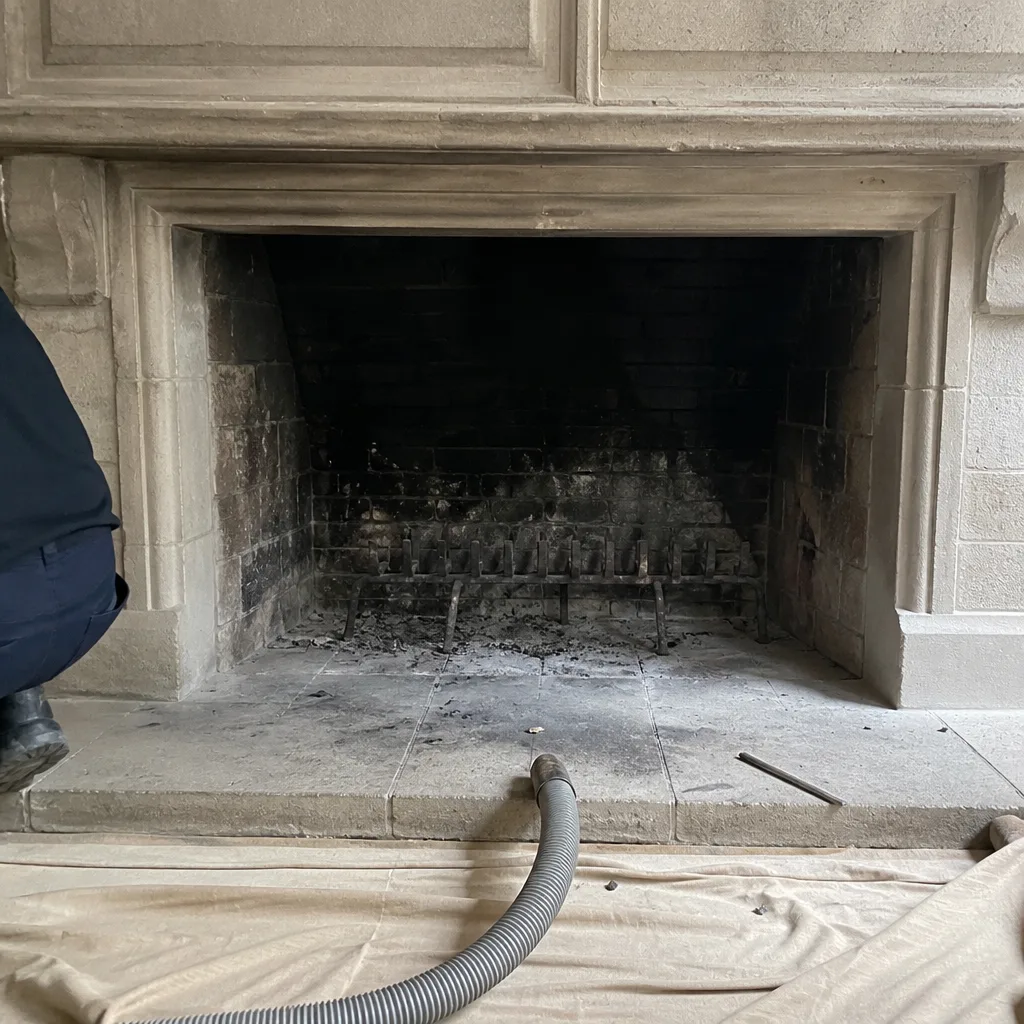 Before
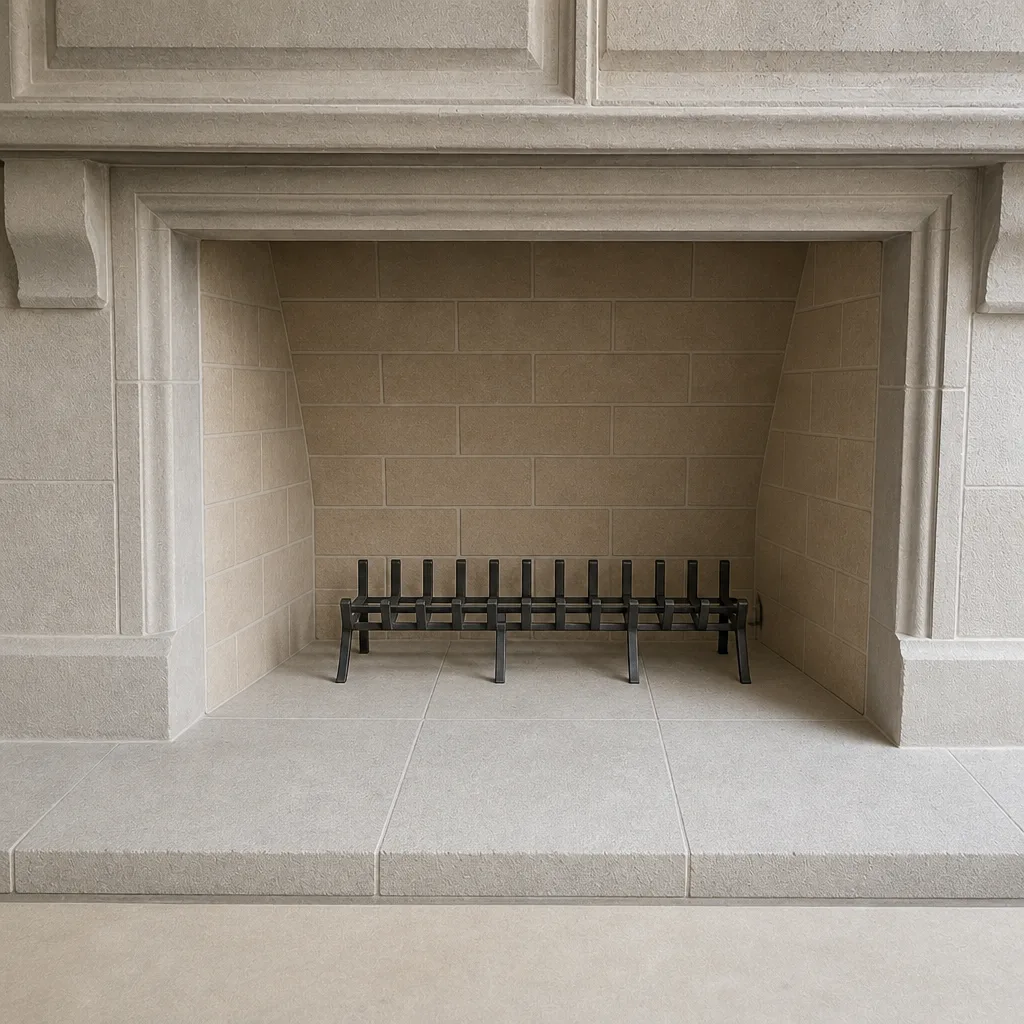 After
When to Call a Professional
Call when you smell smoke with no fire burning, when you see glazed or shiny creosote in the flue, when firebrick is spalling with the interior exposed, when you hear or see animals in the chimney, or when you spot staining below the crown or crumbling mortar at the top of the stack. Stop using the fireplace until a professional looks at it – those are the stop-now signs, not the clean-later signs. A routine cleaning is separately due based on how often you burn and what condition your chimney is in, and we’ll tell you plainly if it can safely wait. If you’re ever unsure which category a sign belongs to, err on the side of an inspection. Chimney Sweep Bluffview offers free estimates in Bluffview – call (866) 901-7504 to book yours. We answer 24/7, with fast dispatch from 7am to 7pm, Sunday through Friday, closed Saturday. Our technicians have up to 13 years of experience with every chimney and fireplace system we work on.
Frequently Asked Questions
In our experience, it’s a smoky smell that shows up when the fireplace isn’t burning. That smell is creosote and soot off-gassing through a flue that isn’t drafting properly. If it’s been a few seasons since your last sweep or you burn regularly through the winter, that smell is your cue to book a Chimney Sweep Bluffview inspection. Call (866) 901-7504 for an exact quote – estimates are free.
Often it can be restored. Not every liner needs to come out. HeatShield resurfacing is designed to restore a deteriorating flue liner without a full replacement in the right conditions, and that can save a substantial sum. If the liner has failed structurally, DuraFlex flexible liner systems are the professional option for safe, code-compliant relining. We scope it from a camera inspection so you aren’t buying a replacement you didn’t need. Call (866) 901-7504 to book an inspection.
For a homeowner who burns regularly, an annual sweep or inspection is the common recommendation. If you burn only occasionally or only on cool evenings, you may be able to go longer. The honest answer depends on how much you burn, what wood you burn, and how your chimney drafts. Book an inspection and we’ll tell you the next interval that’s realistic for your chimney. Call (866) 901-7504 for a free estimate.
The creosote keeps building, and at the glazed stage it’s fuel. A chimney fire can start from a single hot ember catching a glazed deposit, and the fire often burns hot enough to crack the flue liner, which then opens a path for carbon monoxide into the house. Even without a fire, a blocked or restricted flue backs exhaust into the living space. Call (866) 901-7504 – we can tell you the stage your chimney is at and whether the cleaning can wait.
Pricing depends on the chimney, the amount of buildup, and whether the roof requires any special access, so it’s set per job by a written estimate after an inspection. We don’t quote blind, and we don’t add charges after the fact. If cap or crown work is also needed, that’s quoted separately and clearly. Call (866) 901-7504 for a free estimate – the written estimate sets the final price.
A chimney specialist is the right call. Chimney work involves liner systems, crown and cap installation, firebox masonry, and flue resurfacing – each of those needs trade-grade materials and specific equipment. A generalist may sweep a chimney on the side, but repairs under the same roof are where you want the specialist. We handle the full scope from sweeping to chimney cap & crown installation to fireplace repair in-house, and we use professional-grade materials from Copperfield, HeatShield, and DuraFlex because your chimney deserves more than a hardware-store fix. Call (866) 901-7504 to book an inspection.
The Bottom Line
The chimney signs that matter most are the ones you can see or smell from inside your living room, not the ones you’d only spot from the roof. A smoky smell with no fire burning, rust streaks on the damper, spalling firebrick, white efflorescence, and glazed creosote are stop-now signs. Staining below the crown, crumbling mortar joints, and a damaged cap are call-today signs. Everything else likely means a scheduled cleaning is due, and a professional inspection is what tells you which is which. If any of these sound familiar, don’t wait for the next cold snap to find out. Call (866) 901-7504 for a free estimate. We answer 24/7, with fast dispatch from 7am to 7pm, Sunday through Friday, closed Saturday. Every visit starts with an inspection, so you know exactly what your chimney needs and what it doesn’t.
Written by the team at Chimney Sweep Bluffview.